BOOK REVIEWS
AND
RECOMMENDATIONS
A Quick Note From Post Adoption
Below are a small example of books that cover a range of topics from parenting in general, to parenting different ages, books on ADHD, Autism Spectrum Disorder as well as books for your children about specific topics or issues.
These are books that the Case Managers have found helpful for themselves as well as their families, like yours, that they work every day. Each month we will highlight a different book and will have a review for the book from a Case Manager and possibly from a parent as well.
For each section there is a list that can be downloaded. These lists are not exhaustive. If there is a book not on one of the lists that you would like to possibly have posted or added to the downloadable lists, please email mbarr@centerstx.org and include the book title and author along with a short description. If there is a book that you would like to recommend for the monthly highlight, contact the email above and include your 3-4 sentence review of the book to be included if chosen.
DISCLAIMER: Some books you may find applicable for your family and others you may not. And that is okay. These lists attempt to cover topics and ideas that represent the diverse beliefs of all of our families. We also earn no commission from these links, nor are they the only place to purchase, but just a link for your convenience.
Highlighted Book of the Month
The Complete Guide to Special Education 3rd Ed. by Linda Wilmshurst and Alan Brue
This is a comprehensive resource outlines the individualized education programs (IEP) process step-by-step, from the initial testing to annual checkups. It includes valuable worksheets, checklists, and sample forms for parents or teachers to use, making the special education process easier for everyone involved and ensuring children get the best help possible. The newly revised second edition includes up-to-date coverage on testing procedures, autism spectrum disorder, and more.
This book can also be found in our Parenting Children Diagnosed with ADHD section.
Children's Books (Early Reader through 5th Grade)
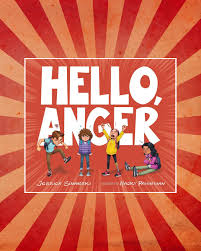
Hello, Anger by Jessica Sinarski is the first book in the Magic Backpack series that encourages children to examine their big emotions by relating them to books that they carry in their backpacks. This book is a great start for kids to begin to develop their emotional intelligence.

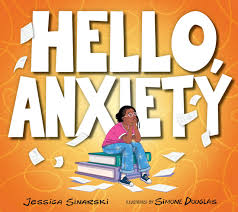
Hello, Anxiety by Jessica Sinarski is her follow-up to the first book in the series, Hello, Anger. This book continues with the same group of students, still learning about all the things they carry with them that are somtimes hidden deep within their "backpacks". This time, it is Anxiety that shows it's face and the children discover how to cope with this new big emotion.

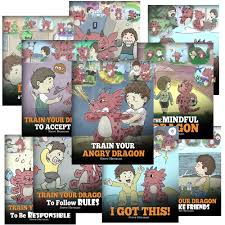
The My Dragon Book Series by Steve Herman is a series of 68, yes 68!, illustrated books that are meant for children ages 2-8 that deal with everything from potty training, dealing with different emotions, being mindful, self-confidence and so much more.

The Invisible Boy by Trudy Ludwig is about Brian, a shy student who feels invisible to everyone. No one notices him, picks him for teams, invites him to birthday parties, or sits with him at lunch. A new student, Justin, starts and gets made fun of for his lunch. Brian gives him a nice note, and Justin notices what a good artist Brian is. He invites Justin to play and work with him. Brian finally doesn't feel invisible.

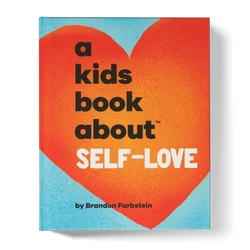
A Kid’s Book About Self-Love by Brandon Farbstein looks at when kids often notice the things that make them feel different or they don’t like. But self-love can help them see what makes them uniquely awesome! This book teaches kids how to choose their thoughts, manage their perspectives, and feel comfortable and happy with themselves, even when hard things happen.

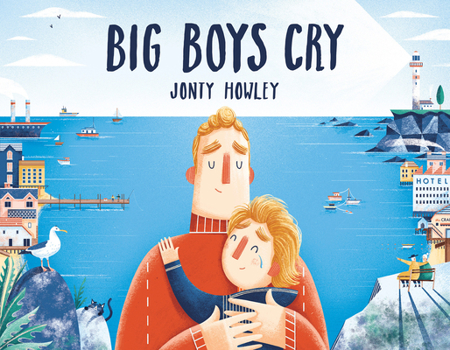
Big Boys Cry by Jonty Howley debut book paints the world we wish existed for our boys, and offers a path there! This story is the truest interpretation of the notion that we should "let boys be boys": let them express the full range of their emotions, vulnerable parts and all!
Download the Children's Book Recommendation List
This list contains the titles and suthors of books for children at Early Reader levels up through and including a 5th grade reading level. It contains the books listed above as well as many others that are recommended by Case Managers and other adoptive families. Some books you may find applicable for your family and others you may not. And that is okay. This is a list that tries to cover topics and ideas that represent the diverse beliefs of all of our families.
Middle Grade Books (late 5th through 8th Grade)
One for the Murphys by Lynda Mullaly Hunt follows a girl placed in foster care who struggles with attachment and her new, loving environment. Despite her resistance, the Murphys eventually show her what it feels like to belong--until her mother wants her back and Carley has to decide where and how to live. She's not really a Murphy, but the gifts they've given her have opened up a new future.

Heaven by Angela Johnson is about a 14yo Marley discovering she was adopted, and when the truth comes down with the rain one afternoon, it changes everything. It turns Momma and Pops into liars. It makes her brother a stranger and Uncle Jack an even bigger mystery. All of a sudden, she doesn’t know who she is anymore and can only turn to those she no longer trusts to find out. Truth often brings change. Sometimes that change is for the good. Sometimes it isn’t.

Kimchi & Calamari by Rose Kent focuses on Joseph Calderaro who has a serious problem. His teacher has given him an impossible assignment: an essay about ancestors. Joseph was adopted, but the only sure thing he knows about his birth family is that they shipped his diapered butt on a plane from Korea and he landed in New Jersey. How do you write about a family you've never known and at the same time manage all the other hassles that middle school mixes in the pot?

In Counting by 7s by Holly Goldberg Sloan, Willow is a 12yo genius, obsessed with nature and diagnosing medical conditions, who finds it comforting to count by 7s. It has never been easy for her to connect with anyone other than her adoptive parents, but that hasn’t kept her from leading a happy life, until now. Her world is tragically changed when her parents both die in a car crash. This odd, but extraordinarily endearing, girl manages to push through her grief. Her journey finding a diverse and fully believable surrogate family is a joy.

The Great Gilly Hopkins by Katherine Paterson follows 11yo Gilly having been stuck in more foster families than she can remember, and she's hated them all. Her reputation for being brash, brilliant, and completely unmanageable, is the way she likes it. So when she's sent to live with the Trotters—by far the strangest family yet—she knows it's only a temporary problem. Gilly decides to put her sharp mind to work and get out of there fast. She's determined to no longer be a foster kid. Before long she's devised an elaborate scheme to get her real mother to come rescue her. Unfortunately, the plan doesn't work out quite as she hoped.

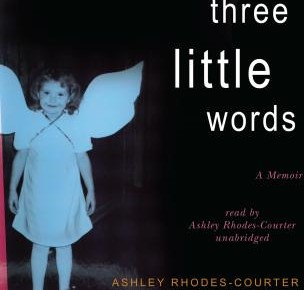
In Three Little Words by Ashley Rhodes-Courter, she shares about 9 years of her life in 14 different foster homes. As her mother spirals out of control, she is left clinging to an unpredictable, dissolving relationship, while getting pulled deeper into the foster care system. In this inspiring, unforgettable memoir, she finds the courage to succeed—and in doing so, discovers the power of speaking out.
Download the Middle Grade Book Recommendation List
This list contains titles and authors of books for children at late 5th grade levels up through an 8th grade reading level. It contains the books listed above as well as many others that are recommended by Case Managers and other adoptive families. Some books you may find applicable for your family and others you may not. And that is okay. This is a list that tries to cover topics and ideas that represent the diverse beliefs of all of our families.
Youth and YA (9th Grade through College Ages)

Far from the Tree by Robin Benway: Being the middle child has its ups and downs. But for Grace, an only child who was adopted at birth, discovering that she is a middle child is a different ride altogether.After putting her own baby up for adoption, she goes looking for her biological family, including—Maya, her loudmouthed younger bio sister, who has a lot to say about their newfound family ties.And Joaquin, their stoic older bio brother, who has no interest in bonding over their shared biological mother.

The Quiet You Carry by Nikki Barthelmess: Victoria Parker knew her dad's behavior toward her was a little unusual, but she convinced herself everything was fine―until she found herself locked out of the house at 3:00 a.m., surrounded by flashing police lights.Victoria has to tiptoe around her domineering foster mother, get through senior year at a new school, and somehow salvage her college dreams . . . all while keeping her past hidden. But some secrets won't stay buried―especially when unwanted memories make Victoria freeze up at random moments and nightmares disrupt her sleep.All she wants is to move forward, but how do you focus on the future when the past won't leave you alone?

See No Color by Shannon Gibney: Being a transracial adoptee doesn't bother sixteen-year-old Alex Kirtridge-at least, not in a way she can explain to her white family. It doesn't matter that she's biracial when she's the star of the baseball team. But when Alex is off the field, she's teased for "acting" too white and judged for looking black. Alex can't stop asking questions. Does she really fit in with her family? What would it be like to go to a black hairdresser? Should she contact her birth father, despite the fact that it might devastate her parents?. If she's going to find answers, Alex must come to terms with her adoption, her race, and the dreams she thought would always guide her.

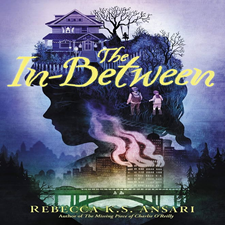
The In-Between by Rebecca K.S. Ansari Cooper is lost. Ever since his father left their family three years ago, he has become distant from his friends, constantly annoyed by his little sister, Jess, and is fed up with the creepy rich girl who moved in next door. So when Cooper learns of an unsolved mystery his sister has discovered online, he welcomes the distraction. The only distinguishing mark on the survivor was a strange insignia on his suit coat, a symbol no one had seen before or since. Jess is fascinated by the mystery of the unknown child— because she's seen the insignia. As they uncover more information, Cooper and Jess begin to wonder if a similar disaster could be heading to their hometown.

If You Find Me by Emily Murdoch: 14yo Carey and 6yo Jenessa have been living in the woods with their mother for as long as they can remember; the sheltering trees and a broken-down camper are all they know. But what they’ve never been told is that Carey vanished from the real world ten years ago, when their mother took her, causing an uproar in the media - and in her father’s life. They’re found by Carey’s father and thrust into a bright and perplexing new world, one of shopping malls, shiny appliances, new clothes, and mouth-watering food. Carey desperately wants to believe in this new reality but is held back by a deep and painful loyalty to her mentally ill mother, who gave Carey her violin and taught her how to play the soaring music that helps her survive.

You’re Welcome, Universe by Whitney Gardner: When Julia finds a slur about her best friend scrawled across the back of the Kingston School for the Deaf, she covers it up with a beautiful (albeit illegal) graffiti mural. Her supposed best friend snitches, the principal expels her, and her two mothers set Julia up with a one-way ticket to a “mainstream” school in the suburbs, where she’s treated like an outcast as the only deaf student. Julia paints anywhere she can, eager to claim some turf of her own. But Julia soon learns that she might not be the only vandal in town. She expected her art might get painted over by cops. But she never imagined getting dragged into a full-blown graffiti war.
Download the Youth and YA Recommended Book List
This list contains the titles and authors of books for youth in 9th grade through College ages. It contains the listed books above as well as many others that are recommended by Case Managers and other adoptive families. Some books you may find applicable for your family and others you may not. And that is okay. This is a list that tries to cover topics and ideas that represent the diverse beliefs of all of our families.
Understanding Trauma and the Neuro-sciences

The Body Keeps the Score by Bessel van der Kolk, M.D. Bessel van der Kolk’s seminal work, The Body Keeps the Score, deep dives into how trauma impacts the brain, body, and mind, often manifesting in physical and psychological struggles. Combining research and case studies, the book highlights innovative treatments, emphasizing the importance of body-based therapies for healing.

The Deepest Well by Nadine Burke Harris, M.D. explores the profound impact of adverse childhood experiences (ACEs) on long-term health and well-being. Blending personal stories, scientific research, and clinical insights, Dr. Nadine Burke Harris reveals how childhood trauma can lead to chronic illness, emotional struggles, and even early death if left unaddressed. Dr. Harris also offers a hopeful roadmap for healing, emphasizing the power of early intervention, resilience, and community support.

What My Bones Know by Stephanie Foo is a powerful memoir that explores her journey of living with and healing from, Complex PTSD (CPTSD). Through raw storytelling, Foo delves into the impact of childhood trauma, cultural identity, and the struggle for emotional peace. Her story offers hope and insight, showing that recovery is possible through therapy, self-compassion, and resilience.

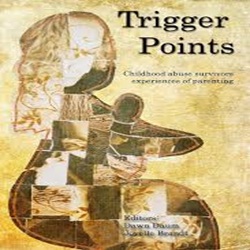
Trigger Points by Joyelle Brandt and Dawn Daum offers a raw and insightful exploration of the unique challenges childhood abuse survivors face as parents. Through personal narratives, the book highlights how past trauma can resurface during parenting while providing understanding and support for navigating these complex emotions and experiences.

The Myth of Normal by Gabor Maté, M.D. challenges societal norms around health, illness, and well-being, revealing how modern culture often creates conditions for disease and dysfunction. Maté emphasizes the need for authenticity, connection, and trauma awareness as essential components for healing and thriving.

It Didn’t Start With You by Mark Wolynn explores how inherited family trauma can shape mental and emotional well-being across generations. The illuminating book offers practical tools to identify and heal subconscious patterns, breaking cycles of pain for future generations.
Download the Trauma and Neuro-Sceinces Recommended Book List
This list contains the titles and authors of books that focuses on the science of how trauma effects the body, the brain, and the person as a whole. Some of the books also delve into the neurological sciences behind the effects that trauma creates. Some books you may find applicable for your family and others you may not. And that is okay. This is a list that tries to cover topics and ideas that represent the diverse beliefs of all of our families.
Self-Care Books for Caregivers

Reclaim Compassion: The Adoptive Parent's Guide to Overcoming Blocked Care with Neuroscience and Faith by Lisa C. Qualls and Melissa Corkum is a book for adoptive parents who struggle with "blocked care," a self-protective nervous system response that hinders connection with their child. The guide combines personal stories, neuroscience, and faith to help parents understand why this happens and offers a step-by-step process to heal and rekindle compassion, assuring them they are not bad parents and that healing is possible.

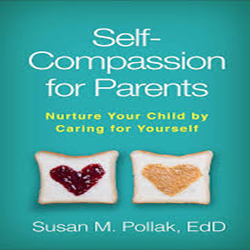
Self-Compassion for Parents: Nurture Your Child by Caring for Yourself by Susan M. Pollak: This book helps parents let go of self-judgment and respond to their own imperfections with kindness. It includes simple, practical guided meditation techniques (most under three minutes) that can be easily integrated into a busy schedule, helping parents feel happier, more energized, and more patient.

Mindfulness for Parents by Amber Hatch: Written in an accessible style, this book teaches parents how to become more patient and calm by using mindfulness techniques. It covers topics like dealing with the early weeks, managing difficult behavior, and introducing mindfulness to children, providing practical information and anecdotes.

Set Boundaries, Find Peace by Nedra Glover Tawwab: This book guides readers in setting healthy boundaries to foster self-care and find peace. It is especially recommended for mothers who often struggle with setting boundaries.

Breathe, Mama, Breathe: 5-Minute Mindfulness for Busy Moms by Shonda Moralis: A "Mom Must-Read" according to Parents magazine, this guide offers quick, daily opportunities for busy moms to reset and refocus using mindfulness. It provides over 60 "mindful breaks" to help tune into personal well-being amidst the chaos of family life.

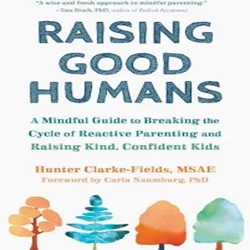
Raising Good Humans: A Mindful Guide to Breaking the Cycle of Reactive Parenting and Raising Kind, Confident Kids by Hunter Clarke-Fields: This book offers powerful, practical strategies for parents to break free from "reactive parenting" habits (like yelling) and respond thoughtfully in stressful moments. It emphasizes using mindfulness to calm your own stress response and foster respectful communication.
Download the Parenting Self-Care Book List
This list contains the titles and authors of books for parents that focus on you. That’s right! You deserve some attention as well. These books aim to help you create boundaries and developp self-care routines. Because unless we take proper care of ourselves, we cannot take proper care of our kids. Some books you may find applicable for your family and others you may not. And that is okay. This is a list that tries to cover topics and ideas that represent the diverse beliefs of all of our families.
General Behavior and Parenting Books
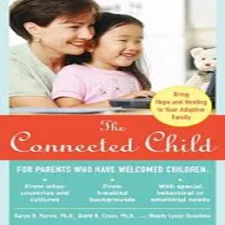
The Connected Child: Bring Hope and Healing to Your Adoptive Family is a book by Karyn B. Purvis, David R. Cross, and Wendy Lyons Sunshine provides guidance for adoptive parents on building bonds, addressing behavioral issues, and disciplining children with attachment challenges. It offers compassionate, research-based strategies for dealing with the unique needs of adopted children, helping families foster trust and affection while navigating emotional, medical, or behavioral difficulties.

Calm the Chaos: A Fail-Proof Road Map for Parenting Even the Most Challenging Kids by Dayna Abraham is a science-backed, trauma-informed parenting guide for parents of neurodivergent children, those with ADHD, autism, or sensory needs, and kids with big emotions. It offers a 5-step framework (Getting to Safety, Restoring Trust, Finding Calm, Getting Ahead, Redefining Success) with practical tools like scripts and prompts to help parents move from surviving to thriving by focusing on connection and regulation instead of traditional discipline.

Raising Kids with Big, Baffling Behaviors by Robyn Gobbel is a neuroscience-based parenting book that helps caregivers understand and respond to challenging behaviors by explaining the brain's role in regulation, connection, and feeling safe. It uses simple metaphors (like the "Owl Brain," "Watchdog Brain," and "Possum Brain") to decode complex brain science, offering practical, science-backed strategies for managing meltdowns, dysregulation, and traumarelated issues, and helping parents regulate their own responses. The book is praised for being compassionate, easy to understand, and providing actionable tools for parents of children with additional needs or trauma histories.

Beyond Consequences, Logic, and Control by B. Bryan Post and Heather T. Forbes is a book that offers a trauma-informed, love-based parenting model for children with severe behavioral issues, particularly those with attachment challenges. It explains the neuroscience of trauma's impact on the brain and provides practical, science-based strategies to replace ineffective traditional methods, focusing on healing and building secure relationships rather than control. The book addresses specific behaviors like aggression, defiance, and lying, offering hope and a path to peace for families.

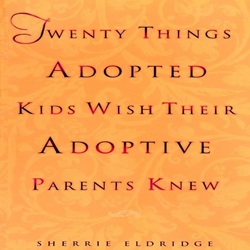
Twenty Things Adopted Kids Wish Their Adoptive Parents Knew by Sherrie Eldridge is a guide for adoptive parents that gives voice to the unspoken feelings and complex emotional issues adopted children experience, such as loss, fear, and shame. Written by an adoptee, the book uses personal anecdotes and expert insights to help parents understand their child's unique needs, encouraging them to proactively address topics like birth family history and the lifelong impact of adoption to foster a healthier parent-child bond. Key themes include validating the child's grief, taking initiative in conversations about their origins, and understanding that behaviors like acting out can stem from adoption-related fears like abandonment.

The Danish Way of Parenting by Jessica Joelle Alexander & Iben Sandahl focuses on raising happy, resilient, and empathetic children through a "democratic" approach that avoids ultimatums, yelling, and physical punishment (illegal since 1997 in Denmark). Based on the PARENT principles (Play, Authenticity, Reframing, Empathy, No-ultimatums, Togetherness/Hygge), this style emphasizes free, non-adult-led play, validating children’s emotions, and cultivating a cozy, cooperative family environment.
Download the General Parenting Recommended Book List
This list contains the titles and authors of books that cover general principles and advice for parenting your children. It contains the listed books above as well as many others that are recommended by Case Managers and other adoptive families. Some books you may find applicable for your family and others you may not. And that is okay. This is a list that tries to cover topics and ideas that represent the diverse beliefs of all of our families.
Parenting Children Diagnosed with ADHD

Taking Charge of ADHD by Russell A. Barkley, Ph.D. Children with ADHD don’t always respond to traditional discipline and parenting methods, and difficult symptoms can make whole families reach the end of their rope. In this straightforward book, Russell A. Barkley, Ph.D., offers an eight-step plan for proven parenting. Inside, you’ll learn how to use positive attention, effective incentives, and calm consistency to manage ADHD symptoms — and reconnect with your child.

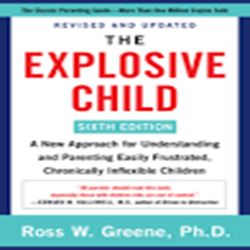
The Explosive Child by Ross Greene, Ph.D., introduces a paradigm for understanding children with ADHD, sensory processing challenges, oppositional defiant disorder, and similar conditions: When children misbehave, it’s often because the demands of the situation exceed what they are developmentally able to handle. Greene teaches parents and children how to problem-solve together using his Collaborative & Proactive Solutions (CPS) method. The easy to- follow book and system provide hope to parents, educators, and children.

Smart but Scattered Teens by Peg Dawson Ed.D. and Richard Guare Ph.D. provides step-bystep strategies to promote your teen’s independence by building executive function skills: brainbased abilities needed to get organized, stay focused, and control impulses. The book’s plan — assessing a teen’s executive skills, using conflict-free tips to bolster them, and knowing when to fade parental supervision before they rebel — is clear and motivational. Smart but Scattered Teens is a must-read for any caregiver or educator determined to help grow the organizational, focus, planning, and motivational skills in teenagers.

Self-Reg: How to Help Your Child (and You) Break the Stress Cycle and Successfully Engage with Life by Stuart Shanker, Ph.D. No matter how difficult, out of control, distracted, or exhausted a child may seem, one thing is true: They aren’t bad, explains Stuart Shanker, Ph.D. They just lack the self-regulation skills to manage their emotions and behaviors. In Self-Reg, Shanker lays out a five-step method to help caregivers better understand the “why” behind their child’s behavior, how to respond to their needs, and what strategies will guide them to a calmer state of mind. Educators can implement the same techniques in classrooms.

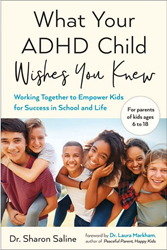
What Your ADHD Child Wishes You Knew by Sharon Saline, Psy.D. Rather than dictate strict discipline instructions for parents of children with ADHD, the book focuses on becoming an empathetic communicator. She offers refreshing insights into the minds and feelings of children with ADHD and offers guidance for interpreting kids’ verbal and behavioral communication. What Your ADHD Child Wishes You Knew promotes and powers parent-child collaboration. Saline’s book provides a roadmap for reducing family stress and improving loving connections, while also enhancing cooperation, closeness, and productivity.

Understanding Girls with ADHD: How They Feel and Why They Do What They Do by Kathleen Nadeau, Ph.D.; Ellen Littman, Ph.D.; and Patricia Quinn, M.D. brings attention to the often-overlooked female experience of ADHD. This essential guidebook blends clinical examples, case studies, and research to clearly explain how ADHD manifests differently in girls and women. The book’s strategies for addressing executive function deficits, recognizing comorbid conditions, and advocating for gender-specific treatment will equip and empower readers to better support — and understand — girls and women with ADHD.
Download the Parenting Children with ADHD List
This list contains the titles and authors of books that focus on helping you, as a parent, understand the complexity and nuances of ADHD. These books cover topics from helping them in school to helping you understand how their brains work. These are books that are recommended by Case Managers and other adoptive families. Some books you may find applicable for your family and others you may not. And that is okay. This is a list that tries to cover topics and ideas that represent the diverse beliefs of all of our families.
Parenting Children with Autism Spectrum Disorder

Uniquely Human: A Different Way of Seeing Autism by Barry M. Prizant – Offers a compassionate, strengths-based approach focused on understanding behaviors rather than just fixing them. He presents a groundbreaking shift in how we understand and support individuals on the autism spectrum. Rather than viewing "autistic behaviors" as symptoms of a disease to be cured or fixed, Prizant reframes them as meaningful coping strategies used to navigate a world that often feels chaotic, overwhelming, or unpredictable.

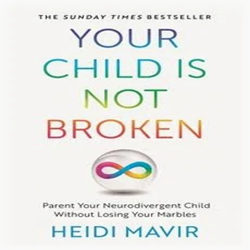
Your Child is Not Broken by Heidi Mavir – is an irreverent, "no-holds-barred" guide for parents of neurodivergent children. Part memoir and part parenting manual, it advocates for a radical shift away from trying to "fix" children to fit into a neurotypical world. A supportive, modern guide empowering parents to advocate for their children and embrace neurodiversity.

The Reason I Jump by Naoki Higashida – is an extraordinary memoir written by Naoki Higashida when he was only 13 years old. Because Naoki is non-verbal and has autism, he wrote the book using an alphabet grid to painstakingly spell out his thoughts, debunking the myth that non-verbal individuals lack complex internal lives.

NeuroTribes by Steve Silberman - is a New York Times-bestselling historical and scientific exploration that fundamentally changed the public conversation about autism. It is widely credited with popularizing the concept of neurodiversity—the idea that conditions like autism, ADHD, and dyslexia are natural variations of the human genome rather than "errors of nature" to be cured. A deep dive into the history of autism and the neurodiversity movement.

The Autistic Brain by Temple Grandin - Combines personal experience with scientific research as it explores autism through a combination of cutting-edge neuroscience and her own lived experience. The book is a pivotal resource that shifts the focus from "fixing" deficits to identifying and fostering the unique neurological strengths of the autistic mind.

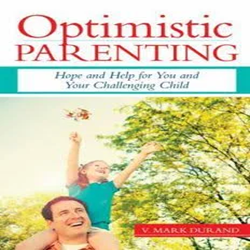
Optimistic Parenting: Hope and Help for You and Your Challenging Child by Mark Durand identifies a major roadblock in behavior management: the parent's own internal narrative. He argues that even the best behavioral strategies will fail if a parent feels hopeless, blamed, or believes their child is acting out on purpose.
Download the Autism Spectrum Diagnosis Book List
This list contains the titles and authors of books for parents with children who have a diagnosis of Autism Spectrum Disorder. It contains the listed books above as well as many others that are recommended by Case Managers and other adoptive families. Some books you may find applicable for your family and others you may not. And that is okay. This is a list that tries to cover topics and ideas that represent the diverse beliefs of all of our families.
Parenting Children with Anxiety/RAD/FAS
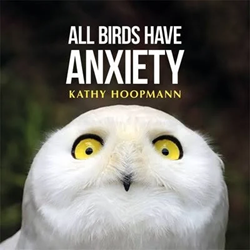
Anxiety and other diagnosis All Birds Have Anxiety by Kathy Hoopmann - Life as a bird can be stressful! From worrying about airplanes, windows, and getting enough worms to eat, it is clear that birds can be anxious beings. Through a light-touch, quizzical depiction of bird behavior, All Birds Have Anxiety uses colorful images and astute explanations to explore with gentle humor what it means to live with anxiety day-to-day, and how to begin to deal with it. The combination of understanding and gentle humor make this the ideal introduction to anxiety disorder for those diagnosed with this condition, their family and friends and those generally interested in understanding anxiety.

The Highly Sensitive Child by Elaine Aron - shifts her focus to the 15 to 20 percent of children who are born highly sensitive—deeply reflective, sensitive to the subtle, and easily overwhelmed. These qualities can make for smart, conscientious, creative children, but also may result in shyness, fussiness, or acting out. As Dr. Aron shows in The Highly Sensitive Child, if your child seems overly inhibited, particular, or you worry that they may have a neurodevelopmental disorder, such as ADHD or autism, they may simply be highly sensitive. And raised with proper understanding and care, highly sensitive children can grow up to be happy, healthy, well-adjusted adults.

Growing Up Brave by Donna Pincus, PhD. helps parents identify and understand anxiety in their children, outlines effective and convenient parenting techniques for reducing anxiety, and shows parents how to promote bravery for long-term confidence. From trouble sleeping and separation anxiety to social anxiety or panic attacks, Growing Up Brave provides an essential toolkit for instilling happiness and confidence for childhood and beyond.

But, He Spit in My Coffee by Keri Williams - When Keri and her husband adopt Devon, he has concerning behaviors, but she’s confident all he needs is the love of a “forever family.” Devon's hidden history of early childhood trauma quickly takes center stage when Devon throws screaming fits, yanks his bedroom door off its hinges, chases his classmates with a knife, and pushes his younger brother down the stairs and viciously karate-chops him in the throat. When Devon is admitted to a psychiatric residential treatment facility at age 10 and is diagnosed with Reactive Attachment Disorder (RAD), Keri is faced with an impossible choice—Devon is too dangerous to live at home, but he’s not getting better in treatment. Keri must race against time to find help for Devon and keep her other children safe, as he grows bigger, stronger, and more violent.

Dandelion on My Pillow by Beth Thomas - This shocking and thought provoking account is the true story of emotionally lost children and how some found their way back. Like a diamond in the rough, all of the kids who killed were tough and protected on the outside while hiding a glimmer of promise inside. For many of these children, the Thomas's were their last hope. With the guidance of this courageous family, their stories of survival and victory break the unwritten code of silence about children without a conscience. Through therapeutic intervention comes the spellbinding metamorphosis of nine children. Although it stems from the deepest of human suffering, each shining triumph will leave you uplifted and celebrating life.

The Best I Can Be by Liz Kulp & Jodee Kulp - A young teen with Fetal Alcohol Effects challenges the world to peer inside her life and brain. Through her own writings the reader is taken on a life changing journey that will impact their thinking about how to help and understand children with brain damage due to Fetal Alcohol.
Download the Anxiety / RAD / FASD Recommended Book List
This list contains the titles and authors of books for parents that are raising children with Anxiety issues, Reactive Attachment Disorder (RAD) and Fetal Alcohol Syndrome (FAS) diagnosis. It contains the listed books above as well as many others that are recommended by Case Managers and other adoptive families. Some books you may find applicable for your family and others you may not. And that is okay. This is a list that tries to cover topics and ideas that represent the diverse beliefs of all of our families.